Skip to Content

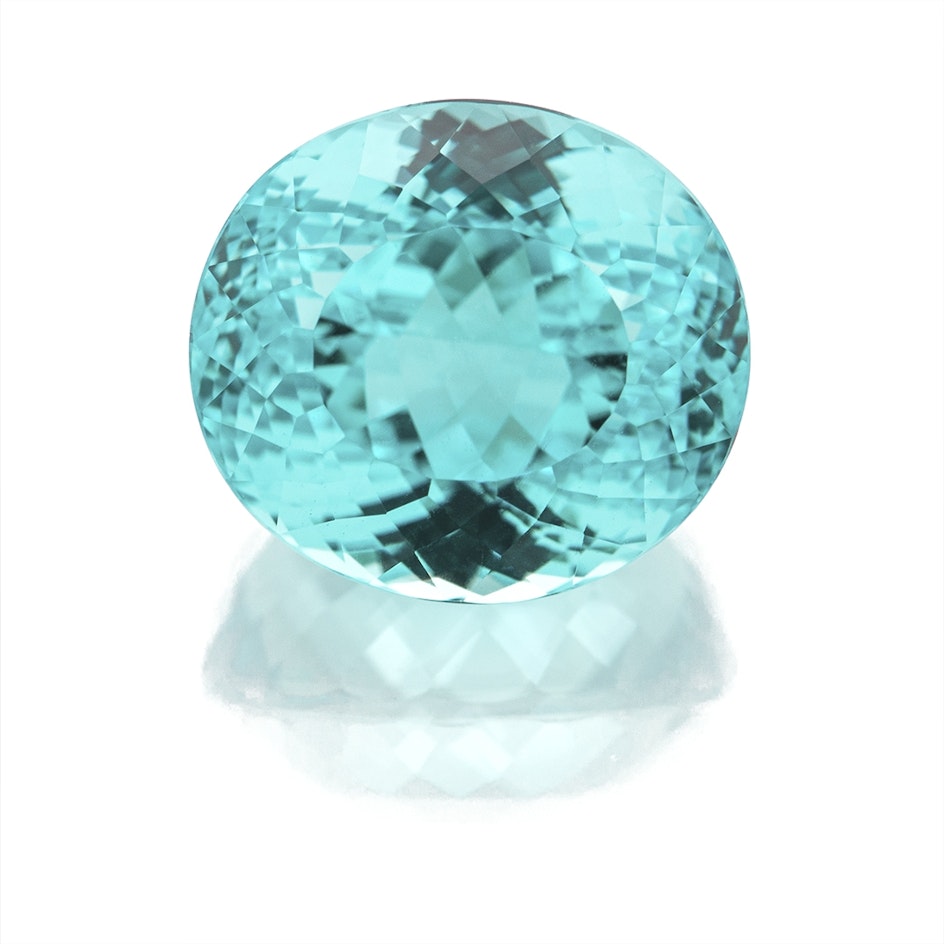
Cuprian Tourmaline - Copper bearing Tourmaline from Africa
Stone Description

Cuprian Tourmaline | Copper-Bearing Beauty Beyond Brazil

Discovered in 1989, the original Paraiba Tourmaline from Paraíba, Brazil, revolutionized the gem world with its electrifying neon blues and greens. Colored by traces of copper (Cu)—a rarity in tourmaline chemistry—this gemstone quickly became the most coveted collector’s stone outside of the traditional “Big Three” (ruby, sapphire, and emerald).

Since then, similar copper-bearing tourmalines have been discovered in Nigeria and Mozambique, giving rise to what is now widely referred to in the trade as Cuprian Tourmaline. These African stones share the same copper-induced brilliance but hail from different origins and deserve recognition on their own terms.

Paraiba vs. Cuprian: Location Matters

While the gem trade has widely accepted "Paraiba" as a color descriptor, we at Mayer & Watt stand by the belief that “Paraiba” is a place, not a palette.

  • True Paraiba Tourmaline refers only to copper-bearing tourmaline sourced from Paraíba State, Brazil.

  • Cuprian Tourmaline is the appropriate term for any copper-bearing tourmaline from other locations, including Nigeria and Mozambique.

This distinction honors the uniqueness of the original Brazilian discovery while appreciating the beauty of its African counterparts.

African Cuprian Tourmaline

  • Nigeria: Discovered in the late 1990s, this deposit was relatively small but produced fine-quality material.

  • Mozambique: A larger deposit was discovered in 2001, and Mozambique has since become the main source of Cuprian Tourmaline on the global market.

While the color intensity from African sources rarely matches the neon glow of Brazilian Paraibas, they excel in size, with significantly larger crystals available. These African tourmalines span a wide color range—including blues, greens, and purples—adding variety and opportunity for collectors and designers alike.

Color and Treatment

One of the most fascinating aspects of Cuprian Tourmaline is its transformation through heat:

  • Purple Cuprian rough, especially from Mozambique, is highly prized because it can be heat-treated to develop the much-sought-after “Windex blue” color.

  • Unheated purple Cuprian stones are rare and valuable in their own right, often commanding collector interest.

As with many colored gemstones, heat treatment is standard and accepted in the trade, especially when it enhances stable, vivid colors.

Market and Value

Prices for African Cuprian Tourmalines have been steadily rising, reflecting increased recognition of their beauty and rarity. Still, they trade at a significant discount compared to Brazilian Paraibas, making them an accessible entry point for collectors and a compelling value for jewelry buyers.

In Summary

Cuprian Tourmaline is a remarkable gemstone family that showcases the power of copper to electrify color. While Paraiba Tourmaline from Brazil remains unmatched in rarity and fame, Cuprian Tourmalines from Africa offer their own distinctive appeal—larger sizes, vibrant hues, and growing appreciation in the gem world.

At Mayer & Watt, we believe in naming gems by origin, not just appearance. That’s why we reserve the term Paraiba for stones from Paraíba, Brazil, and proudly celebrate African Cuprian Tourmaline for the treasure it truly is.

  • Hardness: 7.5

  • RI: 1.618 to 1.643

  • SG: 3.04 to 3.13

  • Gem DNA: ((Ca,K,Na,[]) (Al,Fe,Li,Mg,Mn)3 (Al,Cr, Fe,V)6 (BO3)3 (Si,Al,B)6O18 (OH,F)4)

Interested in buying Cuprian Tourmaline - Copper bearing Tourmaline from Africa stones?

View Available Gemstones

Share this Gemstone